Everything.you.read
Your agent should know everything you've read.
You've read thousands of articles, threads, and PDFs this year. Your AI has read none of them. Stash captures what you read — and the pile you saved and never got to — so your agent can find it, remember it, and act on it.
Saving was never the point.
Every bookmark manager ends the story at “saved.” That's where this one starts.
“Which article had the bit about migration locks?” You read it, you can't name it, and search engines only know the open web. Stash answers from the thing you actually read, and links back to it.
You shouldn't have to remember that you read something in order to use it. Ask a question and what you read eight months ago comes back at the moment it's relevant — not when you happen to think of it.
Draft the reply, compare the two vendors, plan the trip — grounded in your own reading instead of a generic answer scraped off the web this morning.
The.unread.pile
And the things you haven't read.
The 200 links you saved and never opened are read on the way in anyway — the whole page, not the title. So the pile stops being a guilt trip and starts being a corpus: ask which of the forty things you saved this month actually answer your question, and skip the thirty-seven that don't.
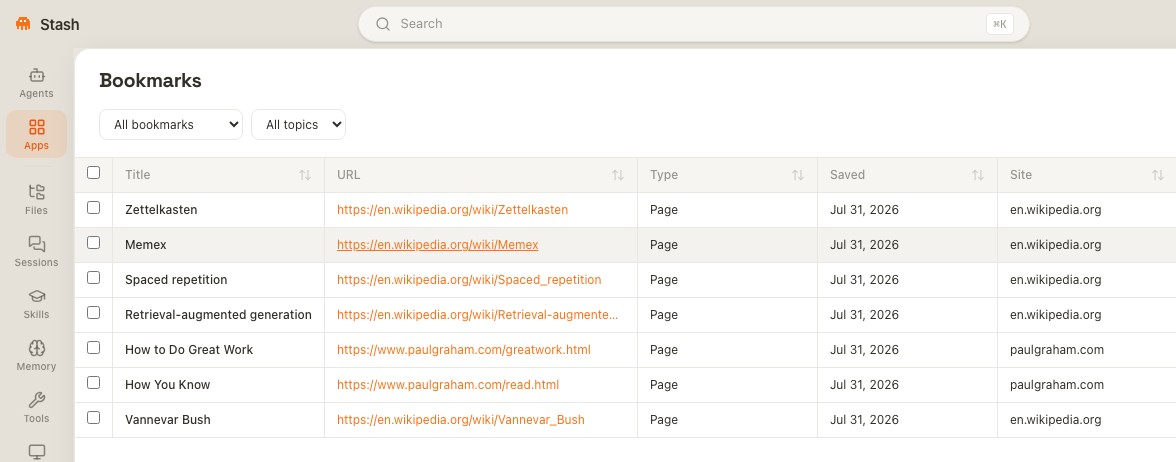
Getting it in takes one click. Usually zero.
A library only works if filling it is free. Nothing here asks you to file, tag, or tidy.
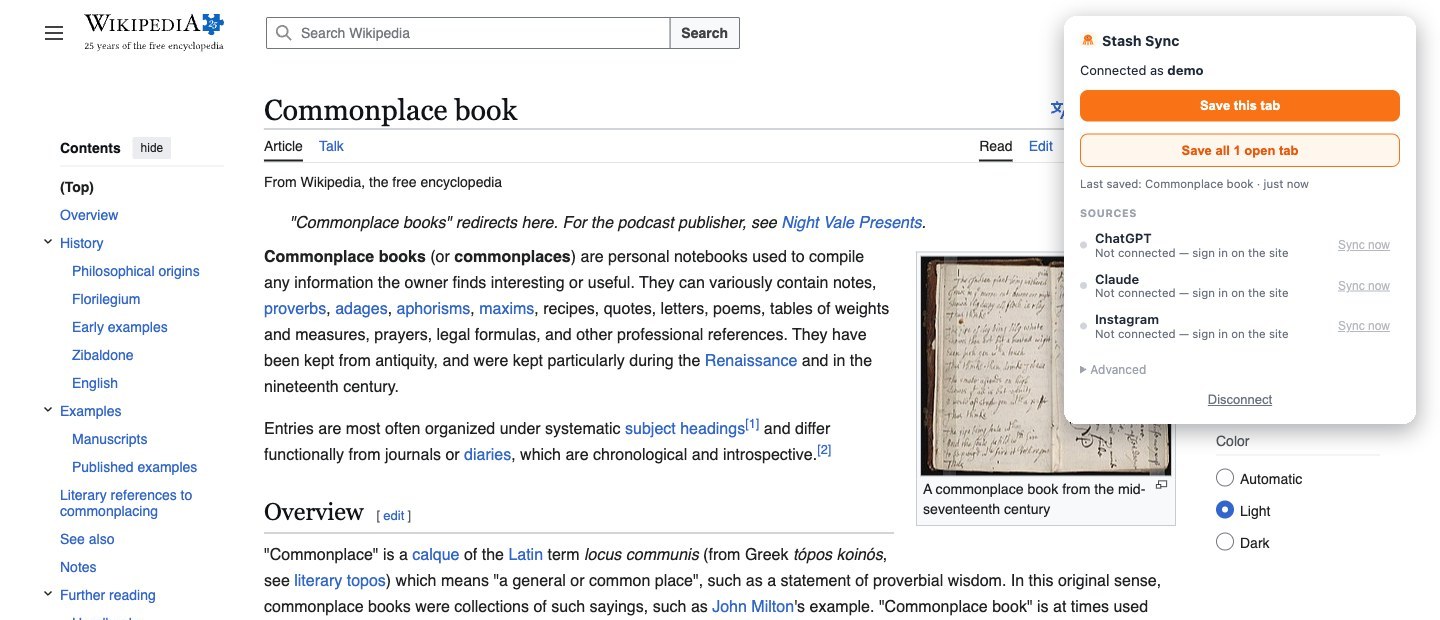
One click saves the page you're reading — or every open tab — as a clean, readable copy. PDFs included.
Bring your whole bookmarks file. Stash fetches each page's content in the background, so a dead link still has the article behind it.
Your X bookmarks sync automatically — text, images, and threads archived so they outlive the post.
ChatGPT and Claude conversations stream in as transcripts, searchable next to everything else you've saved.
Not.a.notebook
A library that fills itself, not a notebook you fill by hand.
Gemini Notebook — the tool formerly called NotebookLM — is grounded in sources you hand it, one notebook at a time, capped at 50 sources per notebook on the free plan, with no way to ask across notebooks. That's a good way to study a stack of documents you've already gathered. It isn't a way to know everything you read this year.
Stash collects in the background instead: one library with no notebook walls around it, and a CLI, MCP server, and API so any agent you already use — Claude, ChatGPT, Cursor — can read the whole thing.